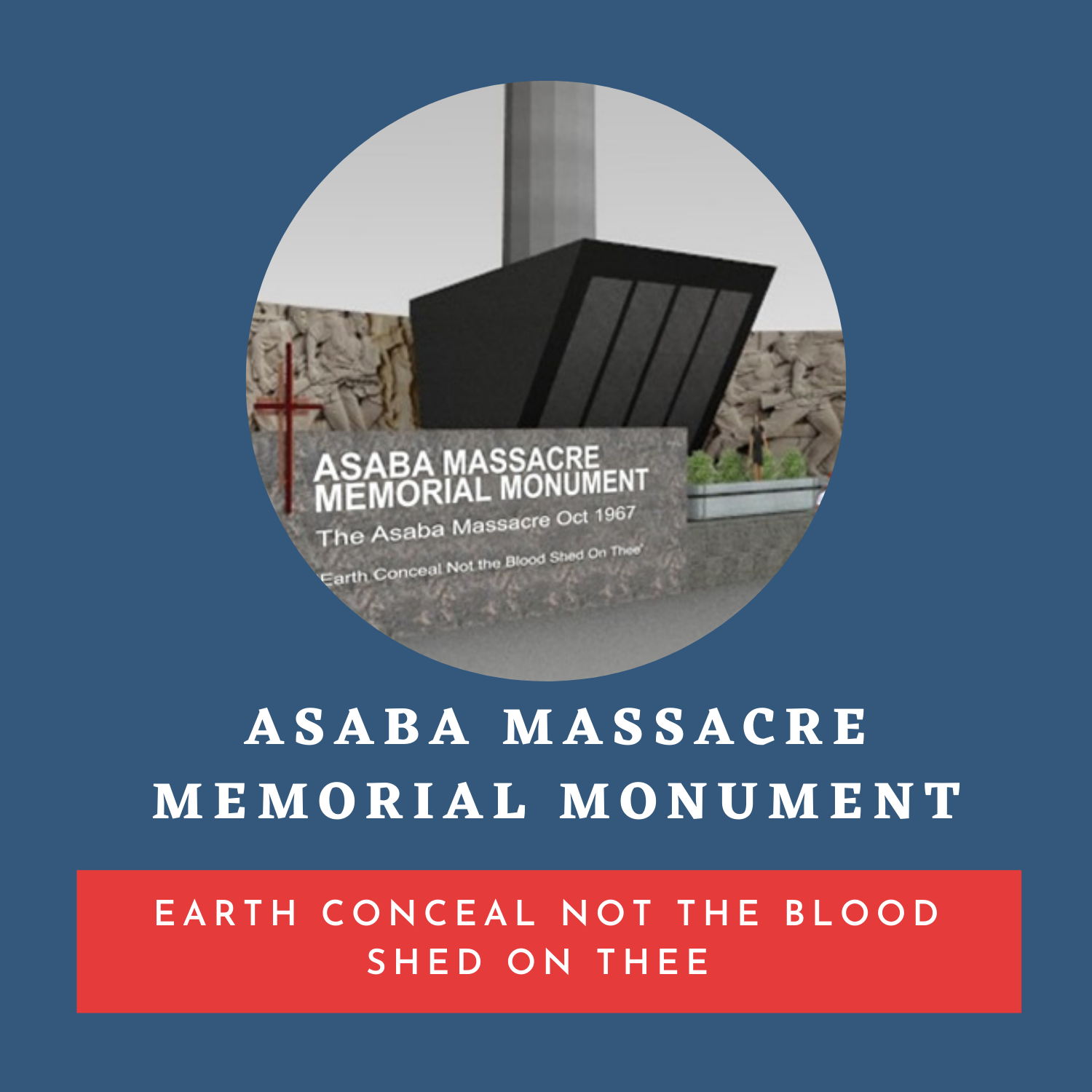
October 1967
The events that shook Asaba and the conscience of a nation.
Asaba Massacre (October 1967)
Based on Wikipedia and scholarly sources including Bird & Ottanelli (Cambridge University Press, 2017)
The Asaba Massacre occurred in early October 1967, during the Biafran War, fought over the secession of Biafra (the predominantly-Igbo, former Eastern Region of Nigeria). Asaba (Igbo: Àhàbà), though linguistically Igbo, was never part of Biafra. The people of Asaba typically identify as Anioma.
In August 1967, three months into the Biafran War, Biafran troops invaded the Midwest Region. They were pushed back by the Nigerian Second Division, under the command of Col. Murtala Muhammed. The Biafrans blew up the eastern spans of the Niger bridge so that the Federal troops were unable to pursue them — leaving Asaba directly in their path.
The Massacre at Ogbe-Osowa
The Federal troops entered Asaba around 5 October and began ransacking houses and killing civilians, claiming they were Biafran sympathizers. Several hundred may have been killed individually and in groups at various locations throughout the town.
Community leaders summoned the townspeople to assemble on the morning of 7 October, hoping to end the violence through a show of support for “One Nigeria.” Hundreds of men, women, and children — many wearing the ceremonial akwa ocha (white attire) — paraded along the main street, singing, dancing, and chanting.
“At a junction, men and teenage boys were separated from women and young children and gathered in an open square at Ogbe-Osowa village. Orders were given to open fire.”
It is estimated that more than 700 men and boys were killed, some as young as 12 years old, in addition to many more killed in the preceding days.
The bodies of some victims were retrieved by family members and buried at home. But most were buried in mass graves, without appropriate ceremony. Many extended families lost dozens of men and boys. Federal troops occupied Asaba for many months, during which time most of the town was destroyed, many women and girls were raped or forcibly "married," and large numbers of citizens fled, often not returning until the war ended in 1970.
The total death toll during early October was in excess of 1,000, although the exact numbers will likely never be known.
Suspect
I.B.M. Haruna has sometimes been named as the officer who ordered the massacre, following a report of his testimony to the Nigerian Human Rights Violations Investigations Commission, known as the Oputa Panel.[1] This article quoted him as claiming responsibility (as the commanding officer) and having no apology for the atrocity. However, Haruna was not present in Asaba in 1967. He replaced Murtala Muhammed as C.O. of the Second Division in spring 1968.
Government Silence
No official apology or explanation has ever been provided by the Federal Government. It remains the only massacre of this magnitude to be treated with such silence and impunity. Asaba people have continued to demand an explanation — and continue to fittingly remember their dead, reminding the country that all Nigerian lives matter.
Anniversary
In October 2017, the Asaba community marked the 50th anniversary with a two-day commemoration, during which the definitive scholarly book on the massacre was launched: “The Asaba Massacre: Trauma, Memory, and the Nigerian Civil War” by S. Elizabeth Bird and Fraser Ottanelli (Cambridge University Press, 2017).
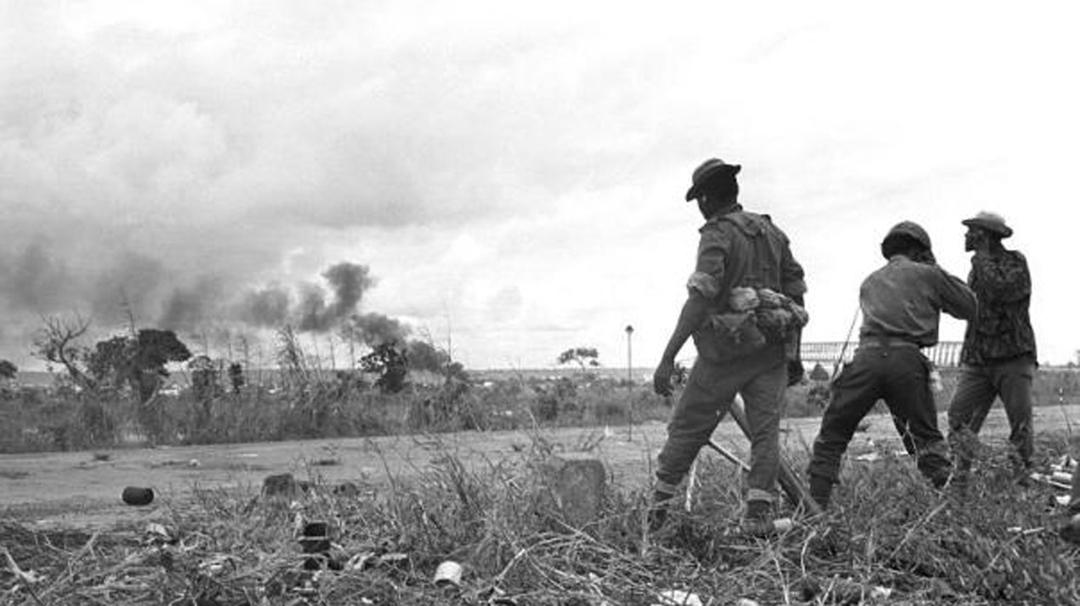
The Asaba Massacre — a living trauma. Source: The Book Banque
Key Facts
- Date
- 4–7 October 1967
- Location
- Asaba, Midwest Nigeria
- Death Toll
- 700–1,000+ men & boys
- Context
- Nigerian Civil War
- Commanding Officer
- Col. Murtala Muhammed
- Perpetrators
- Nigerian Federal Army, 2nd Division
Bibliography
Bird, S.E. & Ottanelli, F. (2017). The Asaba Massacre: Trauma, Memory, and the Nigerian Civil War. Cambridge University Press.
View on Cambridge →Most Vulnerable Nigerians: The Legacy of the Asaba Massacres
1967 Asaba Massacre — ‘1000 Trees for 1000 Lives’